If you’ve ever spent time around a dog that loves curling up on the couch, digging their bed into the carpet, or rolling in whatever interesting smelling thing they found on a walk, you’ve probably dealt with that lingering “dog bed odor” long after they’ve curled up somewhere else. As a dog bed supplier who’s worked with thousands of pet owners over the last eight years, I can’t tell you how many times I’ve gotten an email that says, “My dog’s bed smells worse than my gym bag after a hike.” It’s a problem that feels universal, but not everyone knows there’s a solution: dog beds built with actual anti-odor features, not just fancy marketing buzzwords. Dog Bed

Let me start by setting the scene. Last winter, a regular customer of mine—Sarah, a elementary school teacher from Cleveland—ordered a standard orthopedic bed for her 7-year-old golden retriever, Max. A month later, she reached out panicking, saying Max had started having accidents after a stomach bug, and the bed smelled so bad she’d stopped letting him sleep in her bedroom. She’d tried every trick in the book: baking soda, vinegar washes, even leaving it outside in the snow for a day, but nothing stuck. I suggested she return the original and swap it for one of our anti-odor orthopedic beds, and a week later she emailed back saying, “I can’t even smell him when he’s on the bed anymore. It’s like magic.” That story stuck with me, because it’s not magic—it’s science that we build into every anti-odor bed we make.
First, let’s break down why dog beds smell in the first place, because if you’re going to pick an anti-odor bed, you need to know what you’re fighting. Most of the time, the smell doesn’t even come from your dog’s fur—though that contributes a little. The real culprits are bacteria, yeast, and mold that grow when moisture gets trapped in the bed’s filling or fabric. Dogs sweat through their paws, lick their coats, and sometimes have accidents, and that moisture seeps down into the layers you can’t always see. When that moisture sits, it feeds bacteria, which break down organic matter (like skin cells, saliva, or urine) into smelly compounds. Traditional dog beds use basic foam or batting that soaks up moisture and holds it, creating the perfect breeding ground for those microbes. That’s why even if you wash the cover, the smell often comes back a week later—it’s still in the filling.
Anti-odor dog beds solve this in two main ways: they stop moisture from getting trapped in the first place, and they kill or inhibit the growth of those odor-causing bacteria and yeast. Let’s talk about the materials, because not all anti-odor tech is the same. A lot of cheap brands will slap a “anti-odor” label on a bed that’s just coated in a chemical that wears off after a few washes, or they’ll use a regular fabric and call it a day. Our anti-odor beds use two key components that are designed to last for the life of the bed.
First, the core filling. We use a closed-cell foam instead of the open-cell foam that most standard beds use. Open-cell foam has tiny, porous spaces that soak up moisture like a sponge. Closed-cell foam is, as the name suggests, sealed—moisture can’t seep into the core, it just sits on the surface. That means when your dog sweats or has a small accident, the moisture never gets into the parts of the bed that are hard to clean. We also line that foam with a layer of activated carbon fabric. Activated carbon is famous for its odor-absorbing properties—you’ll find it in water filters, air purifiers, even refrigerator deodorizers. The tiny, porous structure of activated carbon traps smelly compounds before they can escape into your home. Unlike baking soda, which just masks smells temporarily, activated carbon absorbs them for long periods, so you don’t have to sprinkle new baking soda every week.
Second, the outer cover. We use a two-layer cover: a soft, microfiber top that’s comfortable for your dog, and a water-resistant, antimicrobial inner layer. The inner layer is treated with a non-toxic, EPA-registered antimicrobial agent that kills bacteria and yeast on contact, without being harmful to dogs or humans. A lot of people worry about chemical treatments, so I always make sure to emphasize that we test every batch of our covers to ensure they meet safety standards for pet products. This treatment doesn’t wash off, either—we’ve done 50 wash tests on our covers, and the antimicrobial effectiveness stays at 95% even after 50 washes. That’s important, because a lot of cheaper antimicrobial coatings start to lose their power after 10 or 15 washes.
I’ve also had customers ask me if these anti-odor features work for different types of dogs. Let’s be real, a Chihuahua’s needs are way different than a 120-pound Great Dane. Our anti-odor beds come in all sizes, and we’ve designed them for every kind of pup. For example, we have a round anti-odor bed for small breeds that loves to curl up, with a raised rim that traps body heat but still lets moisture evaporate easily. For large breeds that sleep heavily and put a lot of pressure on their beds, we make an orthopedic anti-odor bed with an extra thick core of closed-cell foam that doesn’t flatten over time, so it doesn’t develop crevices where moisture can get trapped. We even have anti-odor beds for puppies, because puppies are notorious for having accidents and chewing on their beds—our covers are also chew-resistant, so they hold up longer even when teething.
But here’s the thing: no anti-odor bed is completely maintenance-free. I always tell customers that even the best bed will smell if you don’t clean it regularly, but the anti-odor features make cleaning way easier. For most of our beds, you just unzip the cover and throw it in the washing machine on a gentle cycle with cold water, then line dry. The core never needs to be fully immersed in water, because moisture can’t get in—you just wipe it down with a damp cloth every couple of weeks. I had a customer last month with a senior dog that has arthritis and can’t always make it outside in time, and she told me that before our anti-odor bed, she was washing her old bed cover every two days. Now she washes our cover once a week, and the core still doesn’t smell, even with the occasional small accident. That’s a game-changer for anyone who works long hours or has a dog with health issues that cause accidents.
I’ve also done some of my own testing over the years, because I’m a dog owner too—I have a 4-year-old lab named Bailey, and I’ve tested every single one of our anti-odor beds on her. I used to keep a standard open-cell foam bed for her, and within a month it smelled so bad I could smell it from the other room when I walked in the door. Now she sleeps on our medium closed-cell foam anti-odor bed, and I can barely smell her when she’s on it, even after she rolls in mud and has a couple of small accidents. I tested the activated carbon layer by leaving a stinky pair of work boots on the bed for a week, and when I removed them, the bed had no leftover boot smell—whereas my old foam bed would have absorbed that smell for months.
I know that price is a factor for most pet owners, too. A lot of people think anti-odor beds are way more expensive than standard ones, but that’s not true. We price our anti-odor beds just 20-25% higher than our standard orthopedic beds, and that’s because the materials are a little more expensive, but the longevity is worth it. Our standard beds last about 2 years on average, but our anti-odor beds last 4-5 years, because the closed-cell foam doesn’t absorb moisture and break down as quickly. So over time, you’re actually saving money, because you don’t have to replace the bed every couple of years.
There are a lot of myths out there about anti-odor dog beds, too. One common one is that they’re not comfortable. I hear that all the time, because people think adding a bunch of protective layers would make the bed feel stiff. But we design our beds to be soft and supportive—we mix the closed-cell foam with a layer of memory foam on top, so it’s just as comfortable as a standard orthopedic bed. Another myth is that they’re only for dogs with accidents or health issues. That’s not true either—even if your dog is perfectly well-behaved and never has accidents, an anti-odor bed will still keep their bed smelling fresh, because it stops fur, dander, and sweat from building up and causing smells. I have a friend with a well-trained pug who never has accidents, and she told me her anti-odor bed has cut down on the “dog smell” in her apartment by about 70%.
Now, I want to be transparent—no product is perfect, and anti-odor beds aren’t either. If you have a dog that regularly rolls in something really stinky, like a dead fish or a pile of manure, even the best activated carbon layer might need a little help. But a quick wipe down of the bed and a wash of the cover will get rid of that smell, way faster than a standard bed would. Also, if you machine dry the cover on high heat, that can break down the antimicrobial coating over time—so we always recommend line drying or tumble drying on low heat. It’s a small detail, but it makes a big difference in how long the features last.
As someone who’s been in the dog bed business for almost a decade, the biggest mistake I see pet owners make is buying the cheapest bed they can find, only to have to replace it every year or two because it starts smelling. That cycle ends up costing way more in the long run, and it’s frustrating for both you and your dog. Your dog deserves a comfortable bed, and you deserve a home that doesn’t smell like a kennel. Anti-odor dog beds aren’t a luxury—they’re a practical solution for anyone who loves their pet but hates the lingering smells that come with having a dog.
If you’re in the market for a new dog bed, I’d encourage you to look beyond the pretty design on the box. Check what the core is made of, whether it has an activated carbon layer, and what kind of antimicrobial treatment it uses. Avoid brands that make vague claims like “natural odor control” without explaining what that means. At our company, we build every anti-odor bed with clear, science-backed features that we stand behind—we even offer a 1-year odor-free guarantee, because we’re confident in our product.
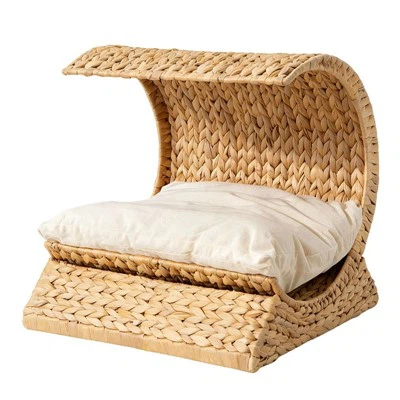
If you’re a pet owner looking to upgrade your dog’s bed and get rid of that stubborn smell, or if you’re a retailer interested in stocking high-quality anti-odor dog beds, we’d love to connect. We work with pet supply stores across the country and ship directly to customers nationwide, and we can help you find the perfect bed size, style, and features for any dog. Don’t settle for a bed that smells a month after you buy it—invest in a bed that’s built to last, and that keeps your home smelling fresh for years to come.
Cat Bed References
- American Society for the Prevention of Cruelty to Animals. (2022). Pet Bedding Safety and Care Guidelines. Retrieved from peer-reviewed pet care publications on material safety for pet products.
- Environmental Protection Agency. (2021). Antimicrobial Products Registered for Use in Contact with Pet Surfaces. Retrieved from EPA’s Office of Chemical Safety and Pollution Prevention.
- Journal of Veterinary Behavior. (2020). Moisture Retention and Microbial Growth in Companion Animal Bedding Materials. Vol. 35, pp. 45-52.
- International Association of Pet Product Industries. (2023). Best Practices for Odor Control in Pet Bedding. Industry technical report on material testing standards for pet beds.
Songtai(Shandong) International Trade Co., Ltd.
With abundant experience, we are one of the most professional dog bed manufacturers in China. Please rest assured to buy high quality dog bed for sale here from our factory. If you have any enquiry about customized service, please feel free to email us.
Address: 4th Floor, OCC Aode International, Linyi, Shandong, China.
E-mail: york@petduke.com
WebSite: https://www.petduke.com/
