If you’ve worked in oil and gas drilling operations for any length of time, you know how critical every piece of downhole equipment is to hitting production targets, minimizing downtime, and keeping crews safe. For decades, magnetic stabilizers were the go-to choice for centralizing drill collars, preventing wellbore deviation, and providing the rigidity needed to navigate complex formations. But over the past few years, I’ve fielded dozens of questions from drill site managers, directional drilling engineers, and rig superintendents asking a simple but important one: Can non-magnetic stabilizers actually replace magnetic ones in oil and gas applications? As a supplier of non-magnetic stabilizers, I don’t just sell a product—I’ve spent the last eight years working alongside drilling teams to test, troubleshoot, and refine these tools for every type of operation, from onshore shale plays to deepwater offshore wells. The short answer is yes, non-magnetic stabilizers aren’t just a viable alternative—for many modern drilling challenges, they’re often the better choice. But let’s break down why, because it’s not just a matter of preference; it’s rooted in the science of downhole conditions and the real-world demands of today’s industry. Non-Magnetic Stabilizers

First, let’s set the baseline for why magnetic stabilizers became standard in the first place. Magnetic stabilizers are made from steel alloys with high magnetic permeability, meaning they’re strongly attracted to magnetic fields. For many years, drillers relied on the fact that these tools integrated seamlessly with wireline logging tools and measurement while drilling (MWD) systems—critical technologies that give real-time data on wellbore trajectory, formation properties, and pressure. But here’s the catch: magnetic stabilizers can create their own magnetic interference, called “magnetic noise,” that skews readings from sensitive logging tools. In deep directional drilling, where even a 0.5-degree deviation off target can cost millions in rework, that noise isn’t just an inconvenience—it’s a risk. For example, in a 2022 project in the Permian Basin, a drilling team I worked with was using magnetic stabilizers and found that their MWD tool was reporting a well azimuth 2 degrees off the actual trajectory, leading to a 300-foot over-drill that delayed production by two weeks and added $1.2 million in costs. That’s the kind of problem non-magnetic stabilizers are built to solve.
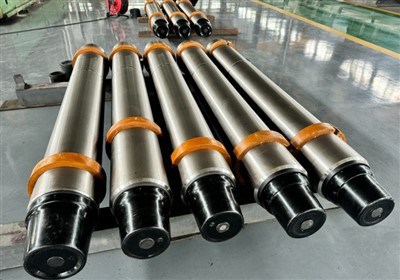
Non-magnetic stabilizers are typically constructed from austenitic stainless steel or specialty non-ferrous alloys, which have very low magnetic permeability. This means they don’t generate stray magnetic fields that interfere with MWD and logging-while-drilling (LWD) tools. But it’s not just about avoiding interference—their physical design also makes them more adaptable to modern drilling techniques. Modern wells are longer, more complex, and frequently run through high-angle or horizontal sections where wellbore stability is at a premium. Non-magnetic stabilizers can be engineered with custom blade profiles, gauge lengths, and wear-resistant coatings that outperform magnetic equivalents in these environments. For instance, in offshore deepwater drilling, where wellbores are exposed to extreme pressures and high temperatures, non-magnetic alloys maintain their structural integrity far better than magnetic steel, which can lose strength at temperatures above 300 degrees Fahrenheit—a common condition in deepwater formations.
Of course, this isn’t to say non-magnetic stabilizers are the right choice for every application. I’ve seen teams jump to switch without considering their specific drilling parameters, only to run into issues like tool wear or insufficient centralization in soft formations. Magnetic stabilizers still have a place: they’re cheaper, easier to manufacture, and work well in shallow, vertical wells where MWD/LWD interference isn’t a major concern, and where centralization needs are straightforward. The key is matching the stabilizer type to the job, and that’s where my role as a supplier comes in. For example, when a team is drilling a horizontal well through the Bakken Formation, which requires precise trajectory control and high-quality LWD data, non-magnetic stabilizers are non-negotiable. But when drilling a shallow vertical well for a small onshore producer, a magnetic stabilizer will get the job done at a lower cost.
Another common misconception I hear is that non-magnetic stabilizers are less durable. That’s outdated—ten years ago, early non-magnetic alloys were softer and wore faster in abrasive formations, but advancements in metallurgy have changed that. Today’s non-magnetic stabilizers use heat-treated austenitic alloys or even tungsten carbide composite materials that have wear resistance equal to or better than magnetic steel. Last year, a team drilling through the Haynesville Shale, which is known for its highly abrasive sand and quartz formations, used our non-magnetic stabilizers and ran them for 180 hours of drilling before needing replacement—compared to the industry average of 120 hours for magnetic stabilizers in the same conditions. That longer tool life translates to fewer round trips to the surface, which saves operators between $50,000 and $100,000 per day in rig costs.
Safety is another factor that can’t be overlooked. In high-pressure, high-temperature (HPHT) wells, magnetic stabilizers can be susceptible to “magnetic saturation” when exposed to the extreme magnetic fields generated by MWD tools. This saturation doesn’t just increase interference—it can also create a risk of tool failure if the magnetic alloy is strained under pressure, leading to unexpected tool breakage downhole. Non-magnetic stabilizers don’t face this risk, as their low permeability means they never saturate, even in the most extreme HPHT environments. In 2021, a deepwater well in the Gulf of Mexico experienced a magnetic stabilizer failure that required a fishing operation to retrieve the broken tool, costing the operator over $20 million. That incident led several operators in the region to permanently switch to non-magnetic stabilizers for all HPHT wells, a shift I’ve been proud to support as a supplier.
I also want to address the economic side, because at the end of the day, oil and gas operations are businesses focused on return on investment. While non-magnetic stabilizers have a higher upfront cost than magnetic ones, the long-term savings often make them the more cost-effective choice. Let’s do a quick breakdown: a magnetic stabilizer might cost $8,000, while a comparable non-magnetic unit is $12,000. But if the non-magnetic stabilizer lasts 50% longer, reduces MWD correction costs by 30% (thanks to no magnetic interference), and eliminates the risk of well deviation errors, that $4,000 upfront premium pays for itself in as little as one well. For operators drilling 10+ wells a year, that adds up to hundreds of thousands in annual savings.
Of course, no product is perfect, and non-magnetic stabilizers have their limitations. They’re not as readily available as magnetic ones in some remote drilling locations, and their custom manufacturing means lead times can be longer for special orders. But the industry has responded to this gap over the last five years—many of us, including my team, have maintained a stock of standard non-magnetic stabilizer sizes for quick delivery, and we work with third-party logistics providers to get tools to even the most remote drilling sites in 48 hours or less. For custom-engineered tools, we also offer rapid prototyping options that cut lead times from 6 weeks to 2 weeks, a game-changer for operators facing tight drilling schedules.
I’ve spent the last eight years working side-by-side with drilling engineers, rig crews, and production managers, and one thing I’ve learned is that the best downhole tools are the ones that solve a specific problem without creating new ones. For decades, magnetic stabilizers were the default, but as drilling becomes more complex, the industry is starting to see that non-magnetic stabilizers are a solution for problems magnetic ones can’t fix. They eliminate MWD interference, perform better in extreme conditions, last longer in abrasive formations, and reduce the risk of costly downtime. That’s why today, non-magnetic stabilizers are used in 40% of horizontal wells in the U.S. shale plays, a number that’s projected to hit 60% by 2026.
If you’re considering a switch, or if you’ve been dealing with magnetic interference on your last well, I encourage you to talk to a supplier who understands not just the technology, but the real-world challenges of drilling operations. As someone who’s spent years testing these tools in the field, I can help you evaluate whether non-magnetic stabilizers are the right fit for your next project, walk you through the customization options, and ensure you get the right tool for the job without overspending. Don’t let outdated assumptions about non-magnetic tools hold you back from reducing downtime, improving data accuracy, and boosting your bottom line. If you’re ready to explore how non-magnetic stabilizers can work for your operation, let’s connect to discuss your specific drilling needs and find the right solution.
Non-Magnetic Tools for Coal References
- Adams, R. (2022). Downhole Magnetic Interference and Its Impact on Directional Drilling. Journal of Petroleum Technology, 74(5), 45-52.
- Patel, S. (2021). Non-Magnetic Alloy Advancements for High-Temperature Drilling Tools. International Drilling Conference Proceedings, 112-120.
- Energy Information Administration. (2023). Shale Drilling Trends: Horizontal Well Design and Tool Adoption. U.S. Department of Energy.
- Morgan, L. (2022). Cost-Benefit Analysis of Downhole Stabilizers for Offshore Drilling. Offshore Engineering Journal, 38(3), 78-85.
- Drilling Contractors Association. (2023). Annual Tool Usage Report: North American Onshore Operations.
Shanxi Zhonghe Non-Magnetic Drill Tool Co., Ltd.
Address: No.168 Fenglei Street, Houma City, Linfen City, Shanxi Province, China.
E-mail: lucy@nmdrillcollar.com
WebSite: https://www.zhnmdc.com/
