If you’ve landed on this post, chances are you’re on the hunt for a box way turning machine center—maybe you’re a job shop expanding your equipment lineup, a small manufacturer looking to upgrade from a manual lathe, or even a seasoned production manager trying to resolve recurring bottlenecks. As someone who’s spent the last 12 years working directly with businesses (and, yes, as a box way turning machine center supplier), I can tell you this: choosing the right machine isn’t just about spec sheets or price tags. It’s about matching every detail of the equipment to your specific workflows, parts, and long-term goals. I’ve seen companies drop tens of thousands on a flashy, high-speed machine only to have it sit idle because it can’t handle the rough, heavy cuts their jobs demand. I’ve also seen smaller shops underspend and wind up reworking parts for months because their machine couldn’t hold tight tolerances. Let’s cut through the noise and walk through the steps that will help you make a choice that works for you. Box Way Turning Machine Center
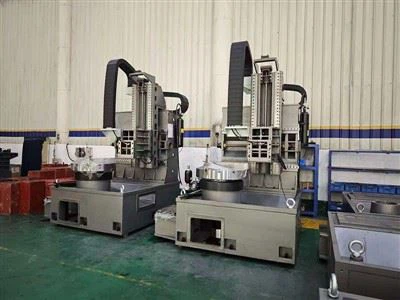
First, stop and map out exactly what you’re going to use this machine for. This sounds basic, but you’d be surprised how many people skip this step. Box way turning machine centers get their name from their flat, rectangular guide rails (the “box ways”)—unlike linear ways, which are more common on high-speed machining centers, box ways are built for rigidity, not speed. That makes them ideal for two big scenarios: heavy, rough-cutting jobs (think turning large, dense workpieces like steel shafts, heavy-duty pump components, or agricultural equipment parts) and consistent, high-tolerance finishing on workpieces that don’t require super fast travel speeds.
So, pull together a list of your most common parts and jobs. For example: Are you regularly turning workpieces that weigh 500 pounds or more? Are you cutting through 4140 steel, cast iron, or other hard materials that require deep cuts? Are your tolerances within ±0.001 inches, or do you need tighter ±0.0005 inch precision? If your answer leans toward heavy, rigid cutting rather than ultra-fast, light turning, a box way machine is the right call. But if your work is mostly small, light aluminum parts for electronics, you might be overbuying with a box way model (linear ways would be more efficient and less costly for that use case). Don’t just rely on a single part either—factor in your average batch size, too. Job shops that run small, frequent batches of diverse parts will have different needs than a production shop running 1,000 identical heavy parts a month. The latter will want a machine with consistent repeatability to avoid downtime mid-run.
Next, pay close attention to machine rigidity—this is the superpower of box way turning centers, and it’s what makes or breaks their performance. Unlike linear ways, which use rolling elements that create smooth, low-friction movement, box ways rely on a flat sliding surface. That might sound old-fashioned, but it’s exactly why they excel at heavy cuts: the wide contact area of the box ways distributes cutting force evenly, eliminating chatter (that annoying vibration that causes uneven cuts and requires rework). But rigidity isn’t just about the ways, it’s about the whole machine build. Start with the bed: cast iron is still the gold standard here, for a few reasons. It’s denser than steel, so it absorbs vibration far better than steel beds, which is critical for tight tolerance work. It’s also less prone to warping over time, even with heavy, repeated use. Avoid machines that use fabricated steel beds, especially at the mid-range price point—they’re lighter, cheaper to make, and great for light work, but they flex too much under heavy cuts, leading to poor part quality.
Then, look at the spindle and the linear axes. The spindle is where your cutting tool or workpiece (depending on your machine’s setup) mounts, so its power and rigidity are non-negotiable for box way applications. Spindle horsepower is measured in kilowatts or horsepower—for heavy turning, you want at least 15 HP (11 kW), and ideally 20 HP (15 kW) if you’re cutting hard materials or deep cuts. Spindle speed matters too, but don’t chase high RPMs just for the sake of it. Box way machines are designed for lower, torque-heavy RPM ranges. A spindle that hits 1,000 RPM might be enough for light work, but if you’re turning steel, you need a spindle that can deliver high torque at low speeds, usually measured in foot-pounds or Newton-meters. A torque rating of at least 100 Nm is a good baseline for most heavy turning jobs. The linear axes (X, Z, and often Y axes on full turning centers) should also have box ways, not just the Z axis that supports the spindle. Having all axes with box ways ensures that movement across the table is just as rigid as the cutting direction, which reduces error during multi-axis turning operations.
Once you’ve got rigidity locked in, it’s time to match the machine to your workspace and existing operations. This is where a lot of businesses get tripped up. First, physical footprint: measure the space you have available. Box way machines tend to be heavier and bulkier than linear way models, so you’ll need to account not just for the machine’s base size, but also for surrounding space for tool changes, loading/unloading workpieces, and access for maintenance. I’ve had customers come to me excited about a machine only to realize their existing doorways or overhead crane capacity can’t fit it. A good rule of thumb: add 2 to 3 feet of clearance on all sides of the machine for operation and maintenance, plus confirm your facility’s electrical and power requirements. Most industrial box way turning centers run on 3-phase power, and some larger models require 480V three-phase, so make sure your shop’s power supply can handle that without needing costly upgrades.
Then, think about compatibility with your current tools and software. If you’re already using a specific CAD/CAM program, make sure the machine control system works with it. Most modern box way machines run on Fanuc or Siemens controls, which are standard across the industry and compatible with nearly all leading CAM software, but it’s worth confirming—there’s nothing worse than buying a machine and realizing you have to retool your entire programming workflow. Also, check the tool changer capacity. If you run jobs that require a mix of turning tools, drills, and tapers, you’ll need a machine with enough tool slots to hold all the tools you commonly use, without having to do frequent tool changes mid-batch, which slows down production. For job shops with diverse parts, 20 to 30 tool slots is a good baseline; for high-volume production, you might want 40 or more to minimize downtime.
Now, price and total cost of ownership (TCO) are critical, but don’t fixate on the upfront sticker price. I know, it’s tempting to go for the cheapest box way turning center you can find, but here’s the thing: a $50,000 machine might save you money now, but if it breaks down every 6 months and requires parts that take weeks to ship, the downtime and repair costs will add up far more than a more reliable $65,000 machine. TCO includes more than just the purchase price. Factor in: maintenance costs (box way machines are simpler than many modern high-speed centers, so their maintenance is usually lower, but you’ll need to budget for regular way lubrication, spindle servicing, and calibration), parts availability, and warranty. Look for machines that offer at least a 1-year parts and labor warranty, and check if local service technicians are available to fix issues quickly. Nothing halts production faster than waiting 2 weeks for a replacement part from an overseas manufacturer. Also, ask about optional upgrades: things like tool setters, spindle chiller units (to maintain consistent spindle temperature and improve tolerance accuracy), and chip conveyors (which make cleaning up after heavy turning jobs a breeze and reduce downtime from chip buildup). These might add to the upfront cost, but they’ll save you time and money in the long run.
Another often-overlooked factor: operator training and support. Even the best machine in the world is useless if your team doesn’t know how to use it properly. When you’re vetting suppliers, ask about training: do they offer on-site training for your operators, or is it only online? How long does training take, and is it included in the purchase price? Also, what kind of ongoing support do they provide? A good supplier will offer 24/7 technical support, especially for urgent issues that could halt a production run. I’ve worked with customers who bought machines from unknown suppliers, only to be left with no one to call when their spindle broke down at 2 a.m. on a Monday before a big production deadline. Avoid that. Look for a supplier with a track record of supporting their machines long after the sale—we often send technicians to customer facilities for calibration and operator refreshers a year after purchase, because we want our customers to succeed, not just make a one-time sale.
Let’s test this framework with a real example, because that’s how it works best. Last year, I worked with a small job shop in Ohio that made agricultural equipment parts—think plow shafts and gear housings. They had been using a manual lathe for 15 years, and their parts were often coming out with chatter and inconsistent tolerances, so they needed a box way turning center. First, we mapped their jobs: 80% of their parts were 300 to 800 pound steel shafts, requiring cuts up to 2 inches deep, with tolerances around ±0.001 inches. They needed to process 10 to 15 different part types a week, in batches of 50 to 200. Their shop had enough power for 480V 3-phase, and a doorway that could fit a machine up to 8 feet wide.
Using our steps, we ruled out any small entry-level box way machines with fabricated steel beds and 10 HP spindles—they wouldn’t handle the deep cuts in steel. We narrowed it down to two mid-range machines: one with a cast iron bed, 20 HP spindle, 12 tool slots, and a $62,000 price tag, and another with a similar cast iron bed, 20 HP spindle, 30 tool slots, tool setter, and chip conveyor, priced at $70,000. We looked at TCO: the cheaper machine only had a 6-month warranty, and its parts had a 2-week lead time. The more expensive machine had a 1-year warranty, 48-hour local parts delivery, and a 3-day on-site training package. The job shop’s operators only had basic experience with CNC machines, so the training support was a big plus. They also realized that the 12 tool slots on the cheaper machine would mean they had to swap tools mid-batch every 20 parts, slowing their production by 2 hours a day. The extra $8,000 for the second machine paid for itself in less than 3 months from reduced downtime and less rework on their parts. That’s the kind of call that makes all the difference.
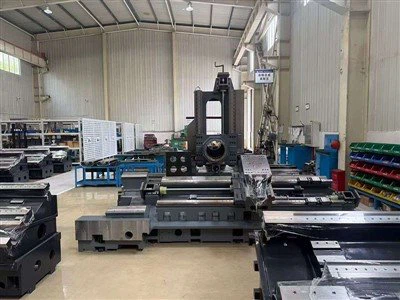
At the end of the day, choosing the right box way turning machine center is all about aligning your machine’s features with your specific needs, not just picking the most popular or cheapest option. It’s about thinking beyond the purchase price to how the machine will fit into your operations, your shop, and your long-term growth. If you’re ready to walk through your own needs in more detail, or have questions about how a box way machine would work for your parts, we’re here to help. We’ve worked with businesses of all sizes, from small job shops to large production facilities, and we don’t just sell machines—we help our customers find the solution that makes their jobs easier, their parts more consistent, and their business more profitable. Feel free to reach out to start a conversation about what you’re looking for.
XY Linear Way Vertical Machining Center References
Todd, R. H., Allen, D. K., & Alting, L. (1994). Manufacturing Processes and Equipment. Prentice Hall.
Krar, S., & Check, A. (2013). Technology of Machine Tools. McGraw-Hill.
Box Way vs. Linear Way Guide Systems: A Comparative Analysis. (2021). Modern Machine Shop.
Smartech Machinery & Equipment Co., Ltd.
As one of the most professional box way turning center machine manufacturers and suppliers in China, we also support customized service. Please rest assured to buy bulk box way turning center machine made in China here from our factory. Contact us for more details.
Address: Room 2832, Changping Commercial Mansion, Shihua Road, Futian Free Trade Zone, Shenzhen, China
E-mail: smartech@smartechcnc.cn
WebSite: https://www.smartech-cnc.com/
